


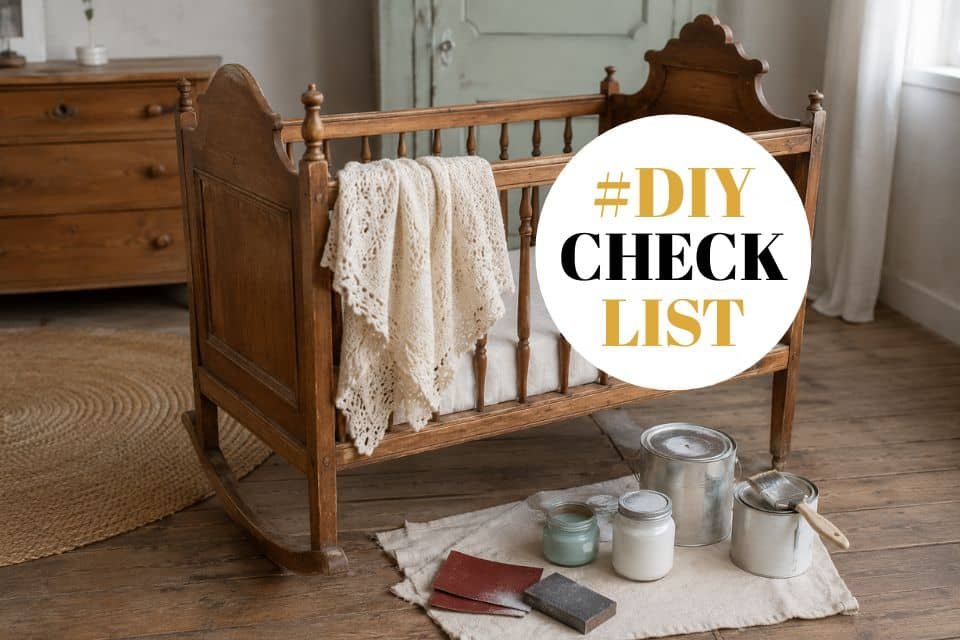
Wooden antique cradles have a unique charm. Whether it’s a family heirloom passed down through generations or a vintage treasure found at a flea market, restoring an old cradle is a wonderful way to give it a second life. However, when it comes to welcoming a baby, safety should always come before appearance.
Before starting your project, follow this checklist of 10 essential points to ensure your antique cradle is safe and ready for use.
You may also like: Makeover of a Wooden Baby Chair (Before/After)
1) Check the Overall Condition of the Wood
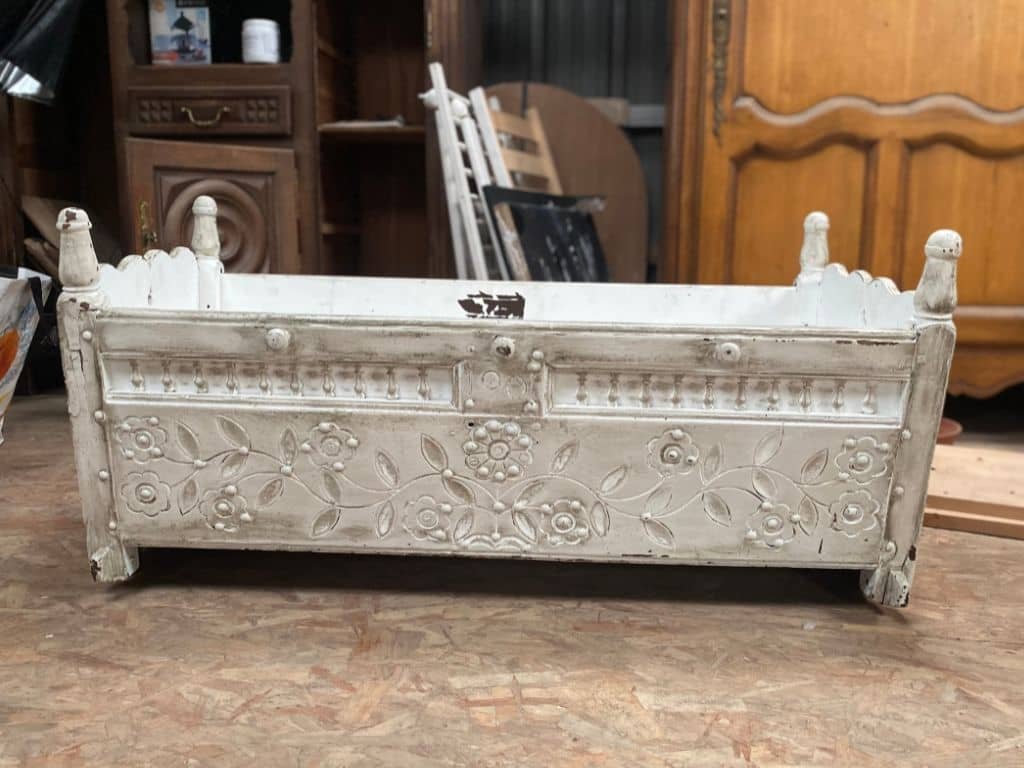
Carefully inspect every part of the cradle.
Look for:
- Cracks
- Splintered wood
- Weak or damaged sections
- Signs of moisture or mold
If any parts are damaged, it is best to repair or replace them before use.
2) Check the Spacing Between the Slats
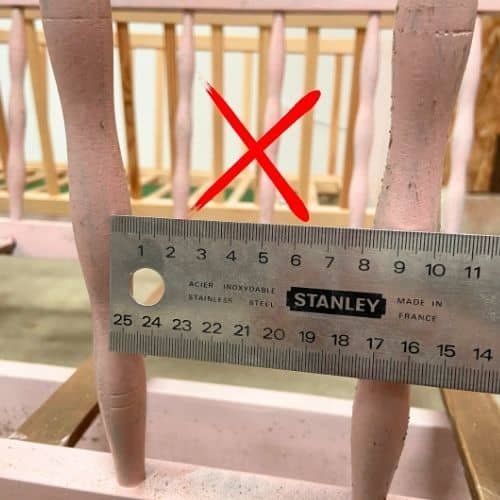
The spacing between the slats is an important safety factor.
The recommended gap should be between 1.75 inches and 2.5 inches (4.5 cm to 6.5 cm).
A wider gap could allow a baby’s head or body to become trapped.
If the spacing exceeds these measurements, it is best not to use the cradle for sleeping and to keep it for decorative purposes only.
3) Tighten All Screws and Fasteners
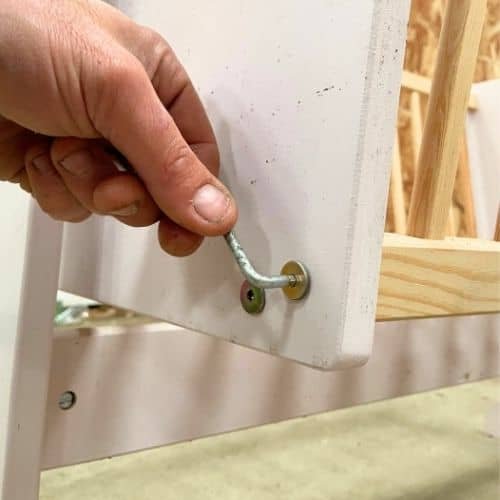
Over time, screws and hardware can loosen.
Check:
- Screws
- Nuts and bolts
- Joints and connections
- Any moving parts
The cradle should be completely stable and free from wobbling.
4) Check the Stability of the Structure

Place the cradle on a flat surface and gently apply pressure to different sides.
The cradle should not:
- Tip over
- Rock excessively
- Show any unusual movement
An unstable structure should be repaired before use.
5) Sand Thoroughly Before Painting

Before applying a new finish, it is essential to sand the old surface.
Sanding helps:
- Remove old paint or finishes
- Eliminate rough areas
- Improve paint adhesion
Always finish by carefully removing all dust.
6) Use a Toy-Safe Paint
Babies naturally put their hands in their mouths and may chew on the crib rails.
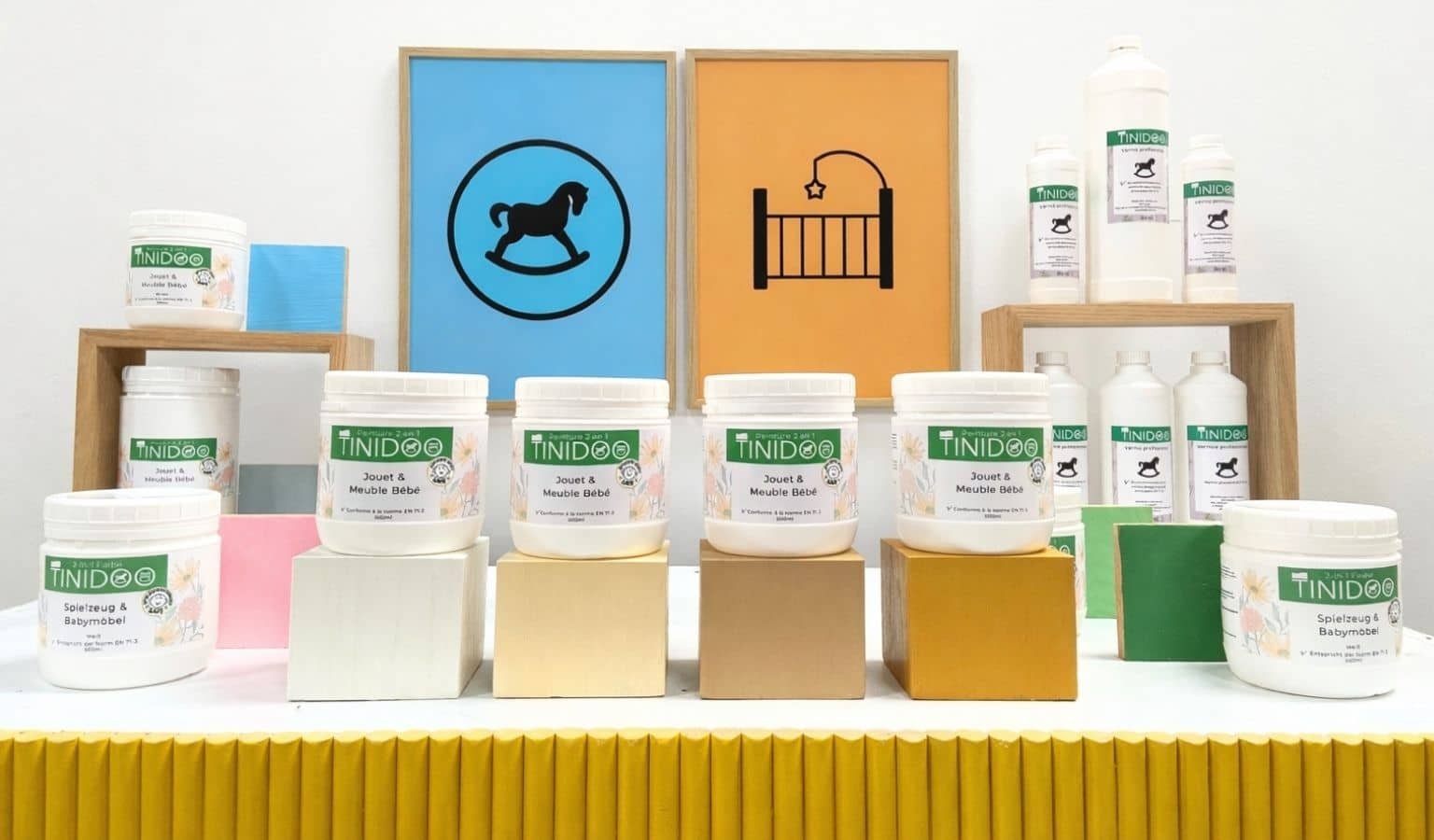
For this reason, it is recommended to use a paint that complies with the EN 71-3 Toy Safety Standard.
This standard helps limit the migration of certain potentially harmful substances if the painted surface comes into contact with a child’s mouth.
For this reason, choose the Lullaby paint.
7) Protect the Wood with a Toy-Safe Varnish
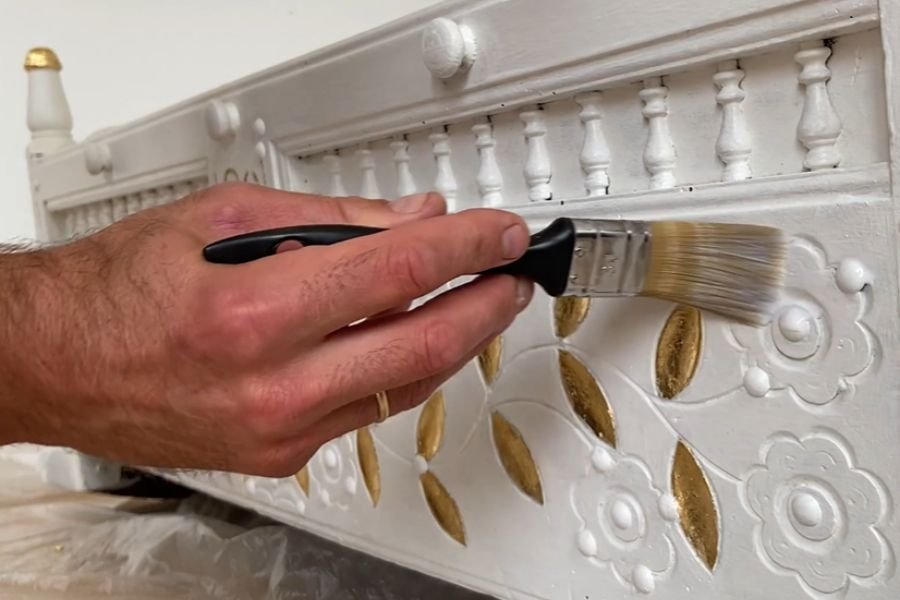
To improve resistance to impacts, stains, and daily cleaning, apply a toy-safe varnish.
This additional protection also makes the cradle easier to maintain over time.
8) Purchase a New Mattress in the Correct Size
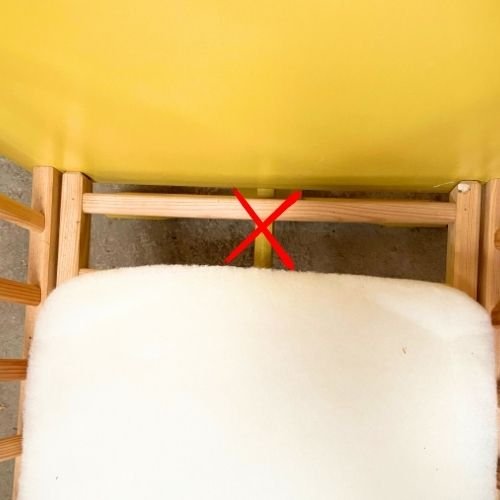
An old mattress should never be reused without careful consideration.
Choose a new mattress that fits the cradle perfectly.
The gap between the mattress and the sides of the cradle should be minimal to reduce the risk of entrapment.
9) Do Not Use Crib Bumpers
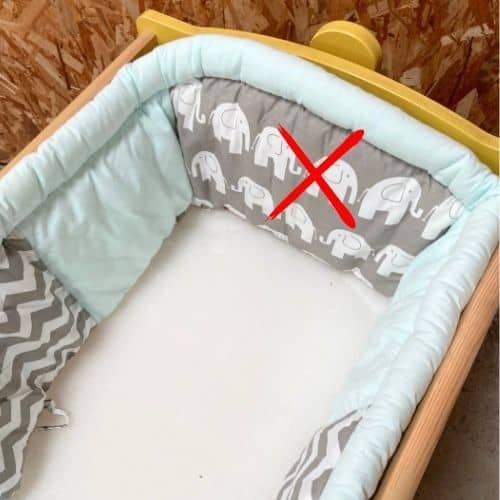
Current safety recommendations advise against using crib bumpers.
They may increase the risk of:
- Suffocation
- Overheating
- Breathing difficulties
A simple sleep environment remains the safest option for an infant.
10) Check for Hazardous Elements
Before the first use, make sure there are:
- No protruding screws
- No hooks
- No detachable decorations
- No sharp edges
Run your hand over the entire cradle to identify any areas that may need correction.
Conclusion
Restoring an antique cradle is a wonderful way to preserve a cherished family memory while creating a beautiful sleeping space for your baby. However, before beginning the restoration process, it is important to inspect every detail carefully to ensure the cradle meets modern safety recommendations.
By following these 10 checkpoints, you can restore your cradle with confidence and enjoy a piece that is both beautiful and safe for your little one.
Happy restoring!