



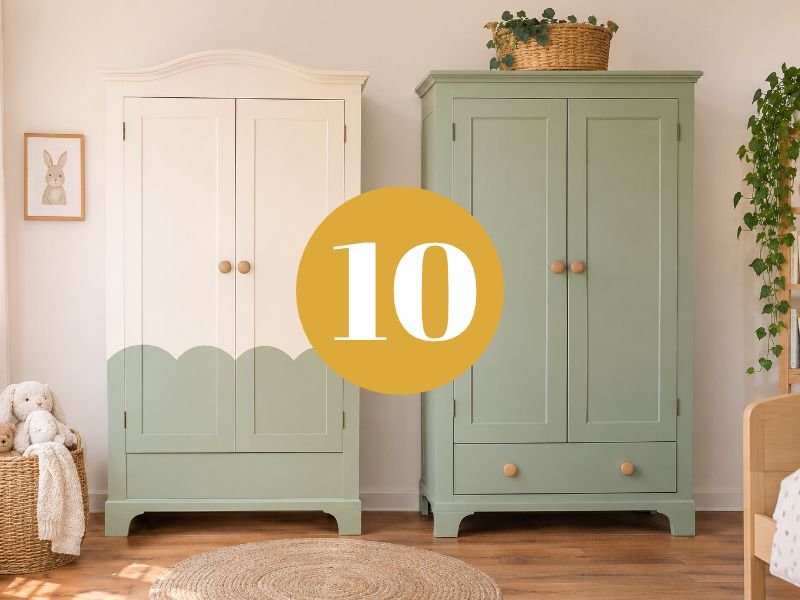
Did you find a dresser in the family attic, pick up a nice piece at a flea market, or simply want to replace the one already in the baby’s room? Renovating a baby dresser is one of the projects that can most transform a room: it’s a large piece of furniture, and its color sets the tone for the entire room.
You don’t have to be a DIY expert to achieve an original result. A beautiful color, a simple pattern, or a small personalized detail is all it takes to create a one-of-a-kind piece of furniture.
Here are 10 ideas to inspire you, ranging from the simplest to the most creative.
On a different note, you might like: How to restore an old wooden school desk?
Color Ideas
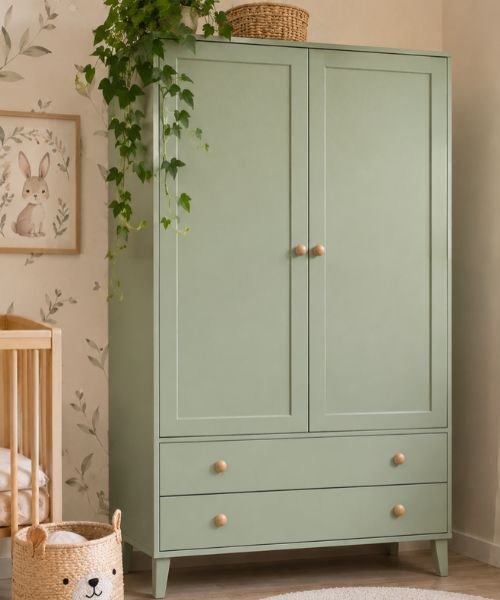
1) Sage green and natural wood
Soft and soothing, sage green is ideal for creating a calm atmosphere. Paint the body of the cabinet and leave the doors, drawers, or top shelf in natural wood: the contrast adds warmth without weighing down the room.
Pair it with: white, beige tones, and light wood.
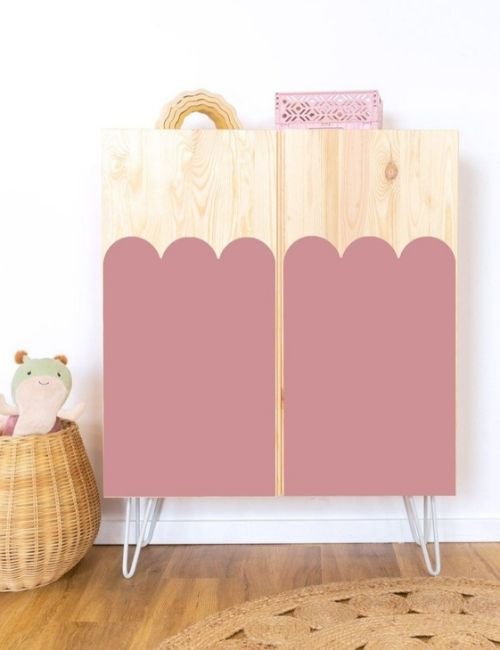
2) The Two-Tone Cabinet
This is one of the simplest and most effective ideas. Choose one color for the frame and another for the doors.
Here are a few color combinations that work well:
- Beige and white for a soft, bright bedroom.
- Light blue and white for a fresh atmosphere.
- Forest green and natural wood for a natural feel.
- Pink and ochre for a warm touch.
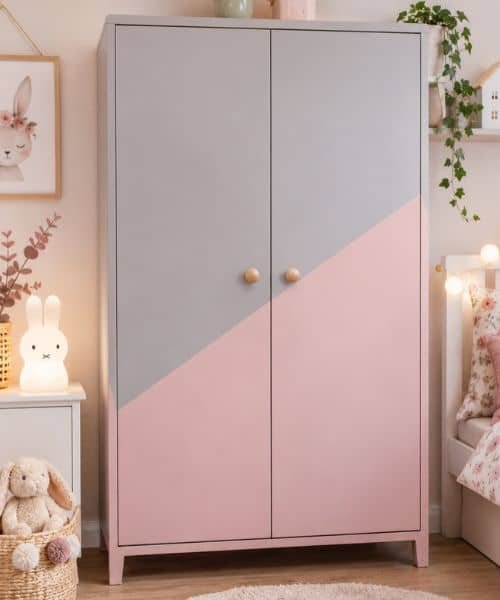
3) Color Blocking
Visually divide the closet into two large sections with a straight or diagonal line. Mark the line with painter’s tape, then paint each section a different color.
For a modern look, stick to two or three shades. The combination of pink and light gray, for example, adds character without overwhelming the room.

4) A Colorful Interior
Do you prefer a simple, understated wardrobe? Save the surprise for the inside. Paint the back or the shelves a cheerful color, like yellow or purple. Or hang wallpaper, as shown in the example here. The effect is revealed every time you open the doors, and the exterior remains easy to coordinate with the rest of the room.
Be sure to let it dry completely before putting your baby’s clothes away.
Design Ideas
You don’t need to know how to draw. All you need is some masking tape, a stencil, or a cardboard template to create crisp shapes.
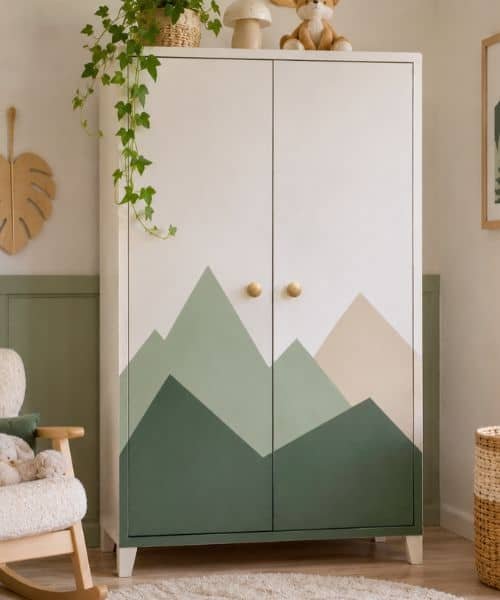
5) A Mountain Landscape
Draw irregular triangles at the bottom of the doors and paint them forest green, sage green, and beige. Layer the shapes to create depth. This graphic design works very well in a nature-themed bedroom.
6) A Cloudy Sky
Paint the cabinet light blue, then add a few white clouds using a stencil. Vary their sizes and arrange them freely across the doors for a poetic look.
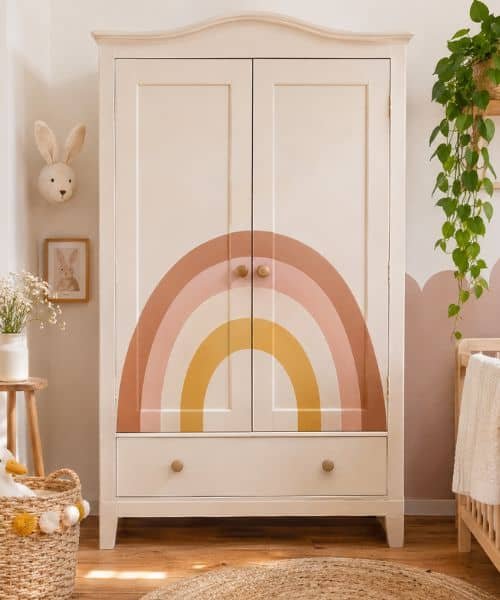
7) Rainbow Arches
In a subtle version,the rainbow becomes a trendy motif: a few arches in ochre, pink, beige, and mustard, painted on a single door or spanning both. A plate or bowl can serve as a guide for drawing even curves.
8) Small stenciled designs
Stars, polka dots, hearts, or leaves: a simple pattern repeated on the doors quickly adds style to the cabinet. To keep it elegant, choose a single color for the pattern and leave some space between each shape.
Customization Ideas
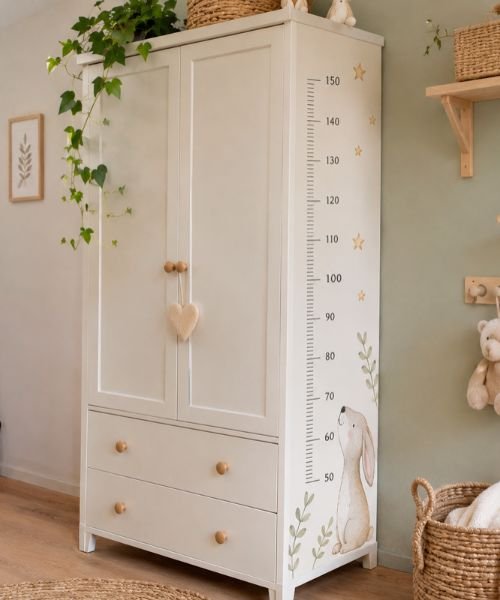
9) A growth chart painted on the side
Draw a graduated scale on the side of the cabinet to track your child’s growth. Year after year, each mark tells a story. A simple pencil or a small stroke of paint is all it takes to mark the milestones.
One final touch: change the handles, too. Wooden knobs or ones that match the paint color will instantly give the cabinet a modern look. Just make sure they’re securely fastened.
10) The Baby’s First Name
Use a stencilto paint the name on a door—at the top of one side or on the inside. Choose a color similar to the furniture’s for a subtle effect, or a contrasting color to make it the focal point of the room.
You can also add the baby’s birthdate on the inside of the door—a little keepsake to rediscover later.
What kind of paint should you choose for a baby’s dresser?
For furniture intended for a toddler’s bedroom, choose a paint that complies with the tou standart, like Lullaby PAINTS which regulates the migration of certain substances.
Tinidoo paints comply with this standard and have very low VOC content. Their 2-in-1 formula combines primer and topcoat, making renovations easier. Several colors are available, ranging from white to forest green, including mustard, ochre, and pink.
How Can You Successfully Renovate Your Closet?

No matter which idea you choose, a few steps can make all the difference:
- Check the furniture: sturdiness, hinges, screws, and make sure there are no splinters.
- Clean and sand lightly to help the paint adhere.
- Apply your paint in thin coats, allowing for the recommended drying times.
- Paint the designs once the base coat is completely dry.
- Protect the entire piece with a toy varnish, like ECOS PAINTS Varnish —matte, satin, or glossy, depending on the desired finish.
For a more detailed tutorial, check out our 5 tips for painting a baby’s dresser.
Three Precautions to Keep in Mind
- Old paint: On antique furniture, it may contain lead. If you don’t know its origin, don’t sand it down without first checking its composition.
- Oak and chestnut: These tannic woods require a special primer to prevent staining.
- Stability: Once restored, secure the cabinet to the wall to prevent it from tipping over.
Frequently Asked Questions
What color should you choose for a baby's dresser?
Soft tones, such as sage green, beige, white, or light blue, create a soothing atmosphere and blend easily with the rest of the room. For a more unique touch, add a brighter color to the doors or the interior.
Can you paint a baby's dresser without sanding it?
Light sanding is generally recommended to improve adhesion, especially on furniture that has already been varnished or painted. However, you should check the composition of any existing paint before sanding.
How can you paint a design without being good at drawing?
Use masking tape for geometric shapes, and a stencil or cardboard template for clouds, stars, or letters. Apply a small amount of paint at a time to prevent it from running under the stencil.
Should you apply a clear coat to a repainted baby dresser?
Varnish isn’t always necessary, but it protects the paint from scuffs and makes maintenance easier, especially on doors and around door handles.
Final Thoughts
Renovating a baby dresser gives a piece of furniture a new lease on life while creating a one-of-a-kind item for your child. Soft colors, graphic patterns, or a painted first name—it’s up to you to choose the idea that best reflects your family.


