



If you’re planning to restore or customize a baby crib, choosing the right paint is one of the most important decisions you’ll make.
A crib isn’t just another piece of furniture. Babies spend many hours sleeping inside it, and as they grow, they’ll inevitably touch, scratch, and even chew on the rails.
The good news is that yes—you can safely paint a baby crib, provided you choose the correct products and allow enough curing time before use.
In this guide, you’ll learn:
- which paints are safest for babies,
- whether your crib is solid wood or melamine,
- and how to choose the right finish.
Can You Paint a Baby Crib?
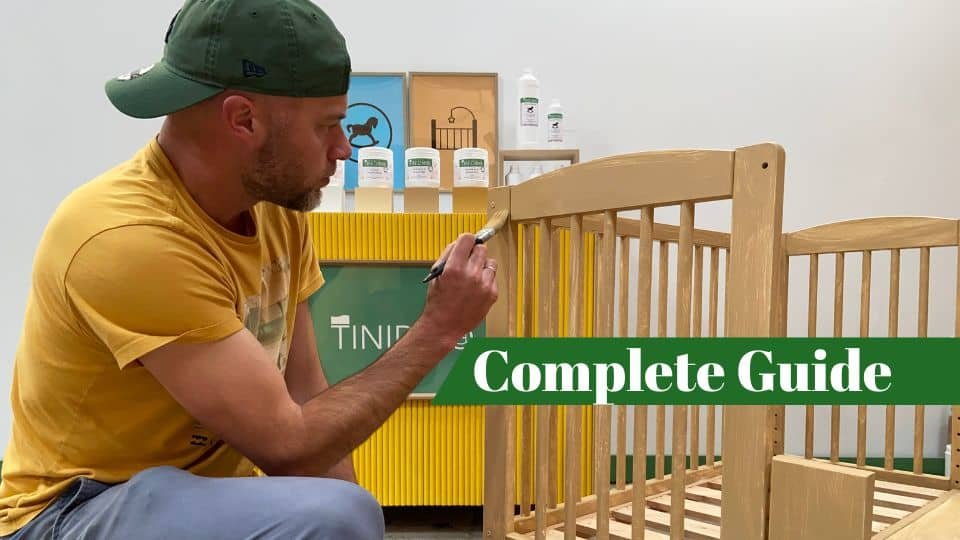
Absolutely. Painting a crib is perfectly safe if you use a baby-safe paint designed for children’s furniture.
The biggest concern isn’t the paint color—it’s the chemicals that may be released while the paint dries or if your baby chews on the rails.
Look for paints that are:
- Low VOC or Zero VOC
- Water-based whenever possible
- Free from lead and heavy metals
- Certified for children’s toys (EN 71-3 or ASTM F963 when available)
These certifications indicate that the cured coating has been tested for the migration of harmful elements, making it more appropriate for furniture that children may touch or mouth.
First: Is Your Crib Solid Wood or Melamine?
This is the question almost everyone forgets.
The type of material determines which paint will actually stick.
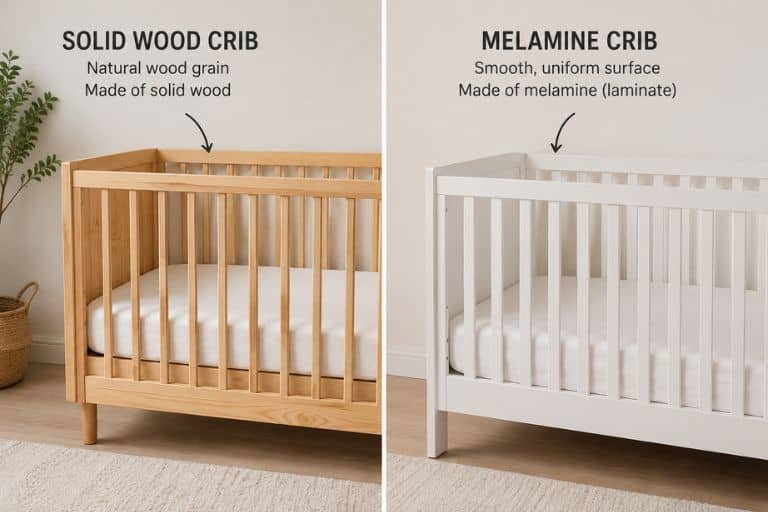
Solid Wood
Examples: Pine, oak, beech, birch, maple
Characteristics:
- Natural wood grain visible
- Can usually be sanded easily
- Paint adheres very well
This is the easiest type of crib to repaint.
Melamine or Laminate
Many modern IKEA-style cribs use melamine.
Characteristics:
- Perfectly smooth surface
- Plastic-like coating
- No visible wood grain
- Difficult for paint to adhere
Melamine requires extra preparation and often a bonding primer before painting.
Best Paint for Solid Wood Baby Cribs
1) Water-Based Acrylic Furniture Paint ⭐ Best Overall
This is the option most DIY parents choose.
Advantages: very low odor, quick drying, durable and easy to clean.
One excellent example is ECOS Paints Lullaby Semi-Gloss Paint (US) which was specifically developed for nursery furniture. It features a Zero-VOC, water-based formula, dries to a hard, washable finish, and is recommended by the manufacturer for cribs, dressers, cabinets, trim, and other children’s furniture.
2) Milk Paint
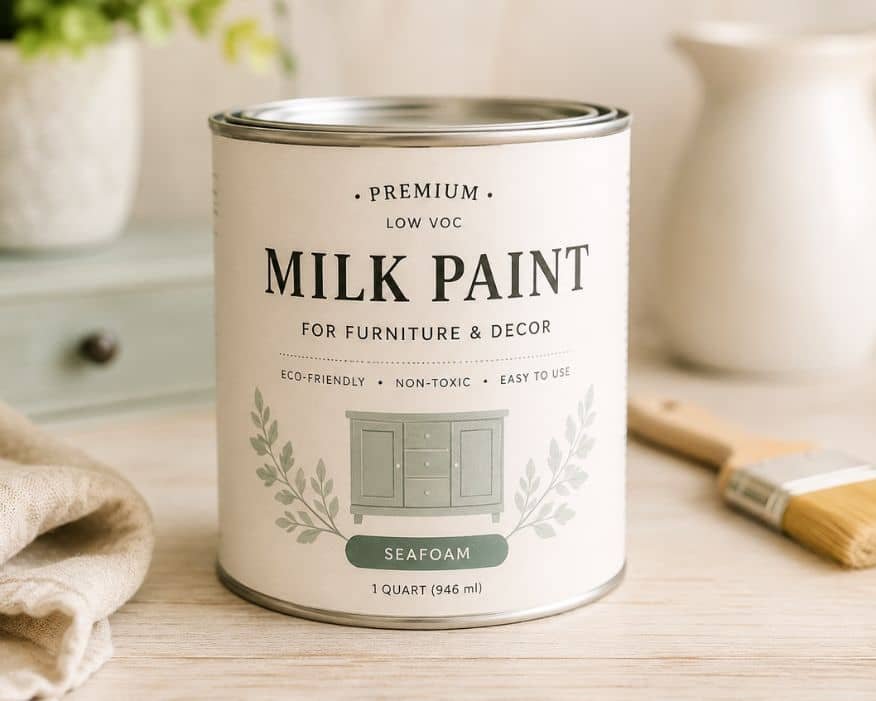
Milk paint has become increasingly popular for nursery furniture.
Made from natural ingredients such as milk protein (casein), lime, and mineral pigments, it contains little to no VOCs and produces an attractive matte finish. On raw wood, it bonds exceptionally well. Many brands recommend applying a protective topcoat afterward, especially on furniture that will receive heavy wear. Some manufacturers also offer toy-safe certified color ranges.
Best for:
- unfinished wood
- vintage cribs
- farmhouse style
3) Chalk paint
Chalk paint is a water-based decorative paint containing a high amount of calcium carbonate. It provides an ultra-matte vintage finish and adheres well to many surfaces with minimal preparation.
However, for baby cribs it should always be sealed with a toy-safe clear topcoat, as chalk paint alone is not very resistant to scratches or moisture.
We recommend Rust-Oleum Chalk Paint.
Best for : vintage crib, distressed finishes, farmhouse nurseries
4) Natural Linseed Oil Paint

Linseed oil paint offers excellent durability once fully cured.
It creates a beautiful traditional finish but takes significantly longer to dry than modern water-based paints and requires proper temperature and humidity during curing.
Best suited for experienced DIYers.
NOTE: Special Consideration for Oak and Chestnut Cribs
If you’re repainting a baby crib made from oak or chestnut, applying a tannin-blocking primer is highly recommended.
These hardwoods naturally contain tannins that can bleed through light-colored paint, causing yellow or brown stains over time. A high-quality stain-blocking primer helps seal the wood, prevents discoloration, and creates a more durable finish.
This step is especially important when painting the crib white or other light colors.
Best Paint for Melamine Baby Cribs
Melamine is much harder to paint than wood.
The secret isn’t the paint.
It’s the preparation.
Step 1
Clean thoroughly.
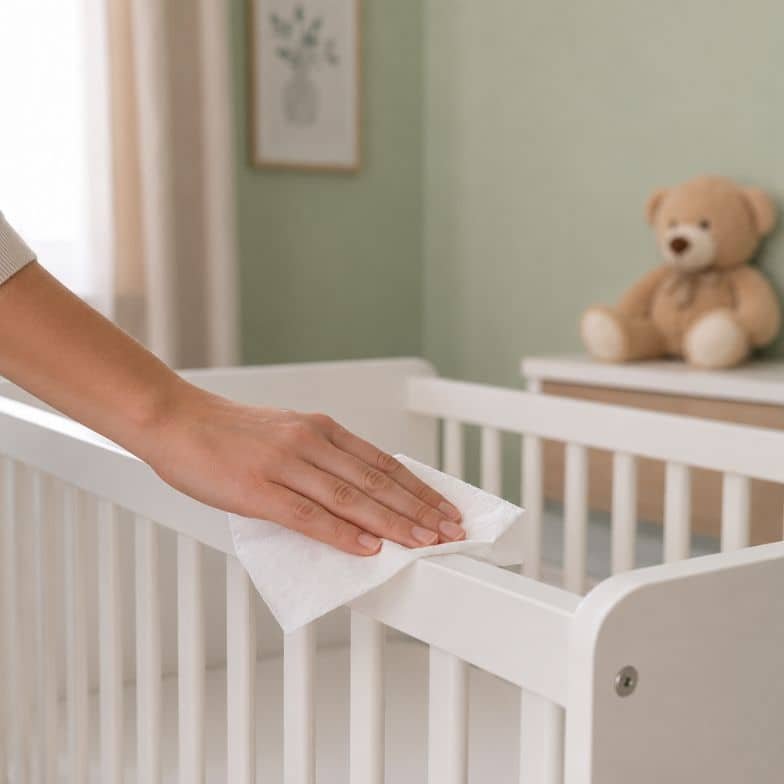
Remove: grease, wax, fingerprints.
Step 2
Lightly sand.
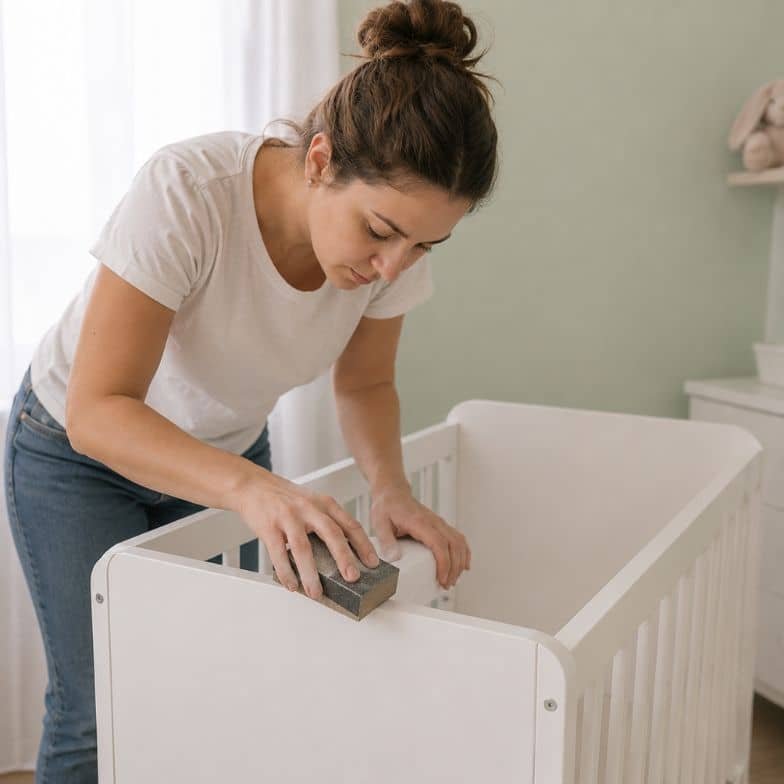
You don’t need to remove the finish.
You simply want to create microscopic scratches for better adhesion.
Step 3
Apply a bonding primer.

This is essential.
Without primer, many paints will peel within weeks.
Step 4
Finish with a durable water-based furniture paint.

Once primed, melamine can be painted successfully with a quality water-based furniture paint designed for cabinets or furniture. Chalk paint is another option used on factory-finished furniture, although durability varies depending on the brand and whether a protective topcoat is applied.
Should You Apply a Protective Top coat?
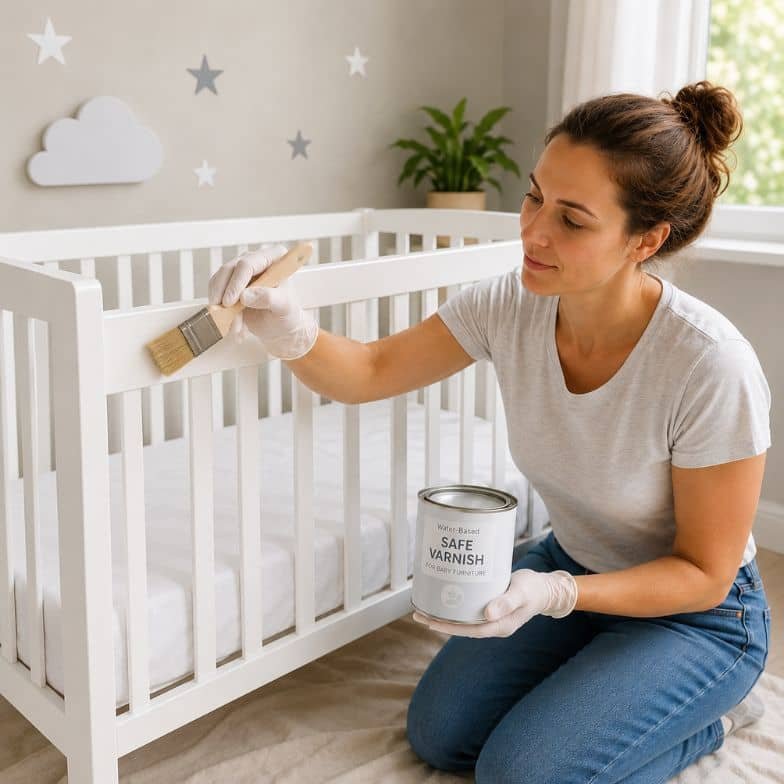
Usually, yes.
A clear protective finish helps:
- resist scratches
- simplify cleaning
- protect against drool
- extend the life of the paint
Choose a water-based, baby-safe varnish or polyurethane that is compatible with your paint system.
Conclusion
Painting a baby crib is an excellent way to give new life to an old piece of furniture, personalize a nursery, or restore a cherished family heirloom.
The key is choosing the right paint for your crib‘s material. Solid wood offers the widest range of safe options, while melamine requires additional preparation to ensure a long-lasting finish. With a low-VOC, baby-safe paint, proper surface preparation, and enough curing time, you can create a beautiful crib that’s both durable and safe for your little one.
Frequently Asked Questions
Can I paint an IKEA baby crib?
Yes. Most IKEA cribs can be painted, but many models use melamine or factory-finished surfaces, so proper cleaning, light sanding, and a bonding primer are essential before applying paint. You will like our post How to Paint an IKEA Crib Safely: Complete DIY Guide
Is chalk paint safe for a baby crib?
Chalk paint can be used on nursery furniture, but it generally needs a protective topcoat to improve durability and make the surface easier to clean. On melamine, proper surface preparation is especially important.
Is spray paint safe for baby furniture?
It can be, provided you choose a low-VOC or zero-VOC product intended for furniture and allow it to cure completely in a well-ventilated area before the crib is used.
Can babies chew painted crib rails?
Babies commonly chew crib rails. That’s why it’s important to choose coatings intended for children’s furniture and, when possible, products that meet recognized toy safety standards such as EN 71-3 or ASTM F963.